
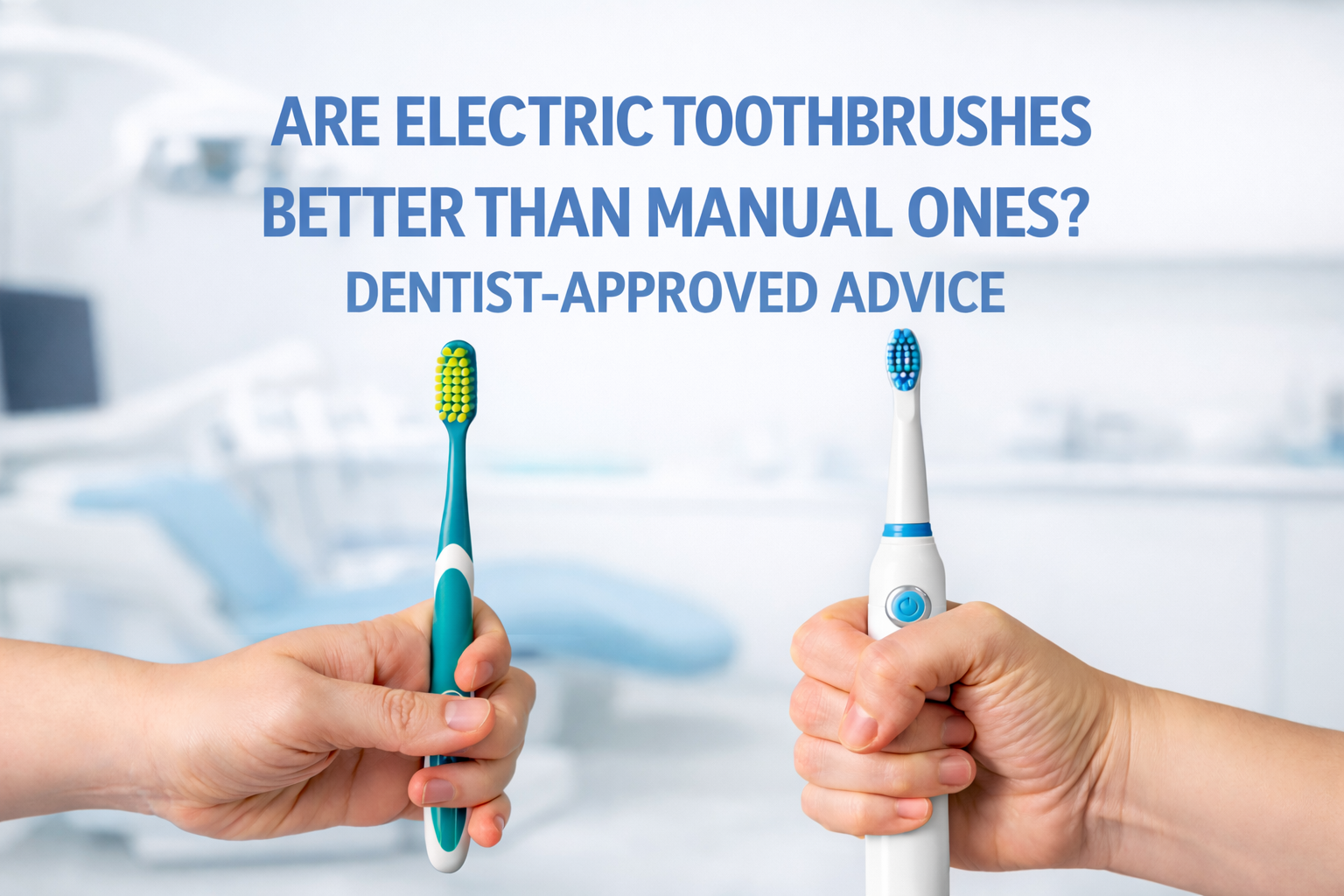
Maintaining excellent oral hygiene starts with one simple tool: your toothbrush. But with so many options available today, you might be wondering — are electric toothbrushes actually better than manual ones? As dental professionals, we’re here to break down the facts, benefits, and what’s best for your smile.
Contents
- 1 🪥 Manual vs Electric: What’s the Difference?
- 2 🦷 What Dentists Say: The Evidence
- 3 😁 Consistent Brushing with Built-In Timers
- 4 🩹 Easier for People With Limited Dexterity
- 5 ⌛ Is It Worth the Cost?
- 6 🪥 Manual Brushes Still Have a Place
- 7 🧠 Dentists’ Tips for Choosing the Right Toothbrush
- 8 🦷 Electric Toothbrush Features That Matter
- 9 🧼 Final Verdict: Which Is Better?
- 10 🦷 Want Personalized Advice?
🪥 Manual vs Electric: What’s the Difference?
Before deciding which is better, let’s understand what each offers:
Manual Toothbrushes
- Simple and affordable
- No batteries or charging needed
- Portable and easy to replace
Electric Toothbrushes
- Powered brushing motion (rotating, oscillating, or vibrating)
- Often includes timers and pressure sensors
- Requires charging or replacement heads
Both can clean teeth — but the how differs. Let’s dive deeper.
🦷 What Dentists Say: The Evidence
1. More Effective Plaque Removal
Electric toothbrushes — particularly those with oscillating-rotating technology — have been shown to reduce plaque more effectively than manual brushes. They can remove up to 21% more plaque and help prevent gingivitis.
👉 This means cleaner teeth with less effort.
😁 Consistent Brushing with Built-In Timers
Most electric models include a 2-minute timer and quadrant reminders, helping you brush for the dentist-recommended amount of time. With manual brushes, it’s easy to cut corners.
🩹 Easier for People With Limited Dexterity
Electric toothbrushes are highly recommended for:
✔ Children who struggle with technique
✔ Elderly patients
✔ People with arthritis or limited hand mobility
Because the brush head does most of the work, you don’t need fine motor skills to clean effectively.
⌛ Is It Worth the Cost?
Electric toothbrushes are more expensive upfront and require replacement heads, but they offer long-term benefits:
✔ Better plaque control
✔ Less gum inflammation
✔ More consistent brushing
For many patients, the improved oral health results outweigh the cost difference.
🪥 Manual Brushes Still Have a Place
Manual toothbrushes are not “bad” — they can be effective if used correctly. A manual brush with soft bristles, combined with good technique and brushing for two minutes twice a day, can still maintain healthy teeth and gums.
🧠 Dentists’ Tips for Choosing the Right Toothbrush
Whether you prefer manual or electric, here’s what to consider:
📌 Bristle Type
- Always choose soft bristles
- Hard bristles can damage enamel and gums
📌 Brush Size
- Pick a head that easily fits your mouth
- Should reach all surfaces comfortably
📌 Brush Replacement
- Replace every 3-4 months
- Or when bristles look frayed
🦷 Electric Toothbrush Features That Matter
If you opt for electric, look for:
✨ Timer & Quad-pacer – Ensures full coverage
✨ Pressure Sensor – Prevents brushing too hard
✨ Multiple Modes – Sensitive, Whitening, Gum Care
✨ Rechargeable Battery – Saves on long-term costs
🧼 Final Verdict: Which Is Better?
❗ For most people, an electric toothbrush beats a manual one — especially in terms of plaque removal, gum health, and brushing consistency.
But if you prefer manual, it can still be effective — as long as it’s used properly and regularly.
Either way, the best toothbrush is the one you use twice a day for two minutes, every day.
🦷 Want Personalized Advice?
Not sure which toothbrush is right for your oral needs? Our team at Infinite Smiles Dental can help you choose the best option based on your dental health goals.
👉 Book a consultation today and keep your smile healthy, happy, and confident!